
Traffic lights on an empty street at night

This Is How Telematics Really Works

If your auto premium has been bothering you, telematics may present a useful savings opportunity. Download an app, let it track your driving, and you could earn a discount based on how you actually use your car.

Telematics is also called usage-based insurance, and it really can help some drivers save. These programs use driving data like mileage, time of day, speed, hard braking, rapid acceleration, cornering, and sometimes location data to help determine premium.

We recommend telematics when it makes sense, because it can be a real savings opportunity for the right driver. But every program doesn’t work the same way, so it helps to understand what is being measured and how your everyday driving lines up with it.

What the app is really scoring

Most telematics programs are not just counting miles. They are looking at patterns like when you drive, how often you brake hard, and how much time you spend on the road. It can be a practical way to show that your day-to-day driving is lower risk than a standard rating formula might assume. That can matter in South Florida, where two households with similar cars and clean records can use those cars in completely different ways.

Lower-risk drivers receive lower premiums through usage-based insurance.

Who usually benefits most

Telematics tends to make the most sense for drivers whose routines are fairly consistent. Maybe you work from home a few days a week, are not commuting long distances, and are mostly on the road for short daytime trips that do not involve sitting on the Palmetto at rush hour or trying to squeeze in three errands between work and dinner. In those cases, letting a telematics program measure what your driving actually looks like can work in your favor.

It can also be useful for households that want another way to bring their premium down without cutting coverage in the wrong place. Florida’s auto market has been easing, which is good news, but most people still want every savings opportunity they can find. Telematics can be one of them.

When it may not be the best fit

Telematics is still worth thinking through before you enroll.

Long commutes, rotating drivers, late-night driving, heavy phone-based navigation, and the kind of week that has you bouncing between I-95, school pickup, and airport runs can all make the results less impressive. A careful driver with a packed South Florida routine can still look a lot busier in the data than they feel behind the wheel.

That does not mean telematics is the wrong move. It just means you should look at it through the lens of how you actually drive. The real question is whether the program is likely to work in your favor.

Privacy matters too. These programs may collect mileage, behavior, and sometimes location data, so that tradeoff should be part of the decision.

Why the details matter

Not every telematics program tracks the exact same things, and not every program turns that data into savings the same way. Some lean harder on mileage. Others pay closer attention to braking, acceleration, time of day, phone use, or overall driving consistency. The amount of data collected also depends on the technology being used and what the driver agrees to share.

That is why the right question is not simply, “Should I sign up?” The better questions are: What does this program track? How much could I realistically save? And does my day-to-day driving look like the kind of driving this program is built to reward?

For the right driver, telematics will turn lower mileage and steady habits into real savings. But the point is not to chase every available discount. It’s to figure out which ones actually improve the overall picture.

Our job is to help clients determine if telematics is a smart fit, what it could realistically save, and what else should be reviewed before they enroll.

Want us to check whether telematics could help?

Before you decide, let us look at the program and your current auto setup.


We can tell you whether telematics is likely to work in your favor, what questions you should ask before signing up, and what other savings opportunities may be worth reviewing alongside it.


How to Use Home Inspection Results as a Negotiation Tool

Most inspection reports get treated like repair lists. That’s a mistake.

For real estate agents, the inspection is not just about what needs to be fixed. It’s one of the clearest ways to understand what the home is actually going to cost to own. And, it is also where a deal can get more expensive than anyone expected.

Some findings are repair items. Others, like roof condition, older plumbing, electrical issues, or missing hurricane protection, are insurance price tags hiding in plain sight. They don’t just affect the home. They affect the buyer’s monthly cost.

And that’s where the leverage is.

The report tells you more than what needs to be fixed

Deficiencies equal leverage
A general inspection tells you what the inspector saw. It usually does not tell you what those findings are likely to do to the insurance side of the deal.

Some items change more than the repair budget ever will. Cast iron drain lines, polybutylene plumbing, an older panel, signs of prior leaks, an aging water heater, or missing hurricane protection can all lead to fewer options, more paperwork, or a premium that comes in higher than the buyer expected.

None of that automatically kills a transaction. But if nobody flags it until the quote comes back, the real estate agent is already negotiating from weaker ground.

Roof findings usually mean more than a repair bill

Real estate agents hear “older roof” all the time. Buyers hear “future expense.” On the insurance side, it can mean something more expensive than that.

Roof age matters, but roof condition is usually what changes the conversation. Once an inspection shows wear, patching, active leaks, soft spots, or visible deterioration, the issue is no longer just maintenance. It can affect pricing, documentation, and how many solid options the buyer really has.

That is what makes roof findings real negotiation points. You are not just asking for money because the roof is old. You are pointing to a cost that may keep showing up long after closing.

When the main systems raise insurance concerns

Instagram video thumnail with the words "I bet you didn't know"
Older South Florida homes are usually where this gets expensive fast.

Electrical, plumbing, and water issues are not just inspection notes. They can change how easy a home is to insure and what that insurance is likely to cost.

An outdated panel or older wiring can narrow options. Cast iron and polybutylene are common enough here that real estate agents should know they can lead to more questions, more conditions, and more cost than buyers expect. The water heater can do the same. If it is near the end of its life, improperly installed, or showing signs of trouble, it may create concerns that go well beyond a basic replacement item.

Not every ugly line on an inspection report deserves a negotiation fight. The ones that can follow the buyer onto the policy usually do.

Wind mitigation can create leverage in two different ways

Sometimes the issue is missing protection. Sometimes it is missing proof.

If shutters are missing, opening protection is incomplete, or the home lacks other key mitigation features, the buyer may be walking into a weaker insurance position than expected. That is a real argument for credits or concessions.

But we also see homes that have helpful features and still are not getting the benefit because the documentation is incomplete. In those cases, the better move may be cleaning up the file instead of throwing out a random credit number.

The strongest real estate agents do this before they negotiate

Before going back to the seller, smart real estate agents ask a better question: what are these findings likely to do to the buyer’s insurance options, premium, paperwork, and timeline?

This is the part we actually care about.

We look at the report and tell you which items are mostly noise, which ones may make coverage more expensive or harder to place, and which ones actually support a stronger ask. Sometimes the answer is a bigger credit. Sometimes it is better documentation. Sometimes it is a buyer who needs the real monthly numbers before they move forward.

Next time a home goes through inspection, send us the report before anyone starts guessing at credit numbers. We’ll help you see where the real leverage is.

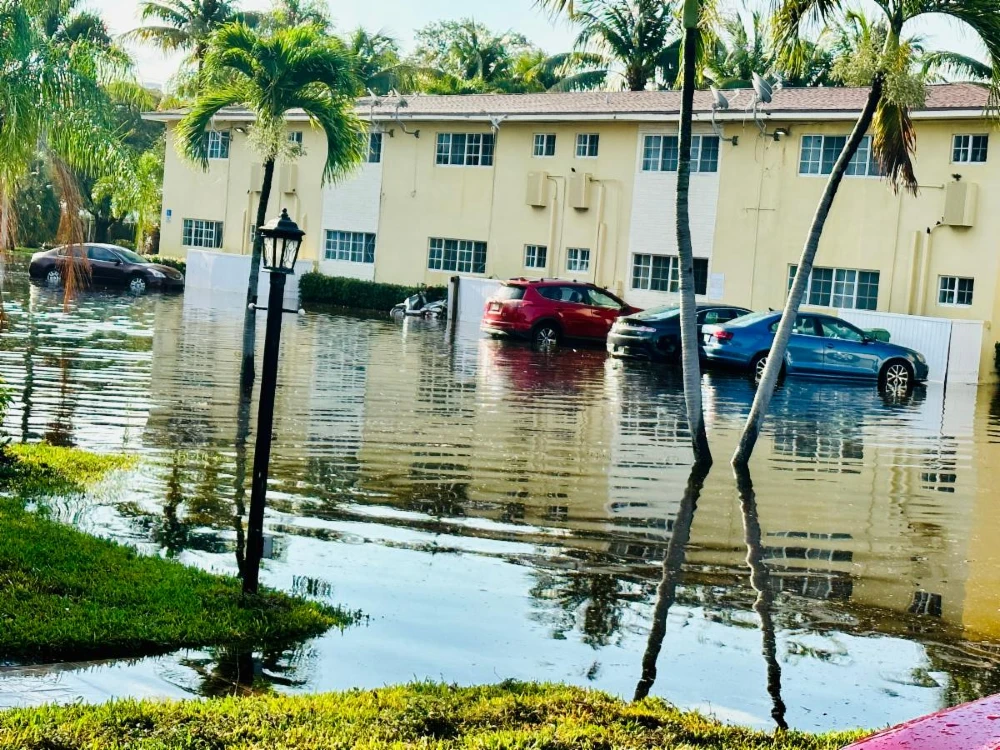
Image of two story building with a flooded parking lot. several cars are partially submerged.

How to Protect Your Buyers When Flood Insurance Is Optional

When a buyer asks, “Do I have to get flood insurance?” the answer is rarely as simple as yes or no.

Sometimes they are asking about the lender. Sometimes they are trying to keep the monthly payment from creeping up. And sometimes they are hoping the flood zone gives them permission to stop thinking about it.

For real estate agents, the goal is not to answer like an insurance advisor. It is to know when the question needs one.

In South Florida, “not required” can be accurate and still leave out the most important part of the decision.

The lender rule is only one piece

Flood insurance may be required when a property is in a high-risk flood zone and the buyer has a government-backed mortgage. That tells you what the lender needs. It does not tell the buyer what water could cost them after closing.

A home outside a mandatory flood zone can still have exposure. Homeowners insurance usually does not cover flood damage, and flood claims are not limited to the highest-risk areas.

So if flood insurance is optional, the buyer still has a decision to make. They can buy coverage, compare NFIP and private flood options, self-insure, adjust the budget, ask different questions of the seller, choose another property, or accept the risk and move forward.

The buyer has options. What they need is a clear look at the tradeoff before they choose one.

Flood maps are not frozen in place

Flood zones change as data changes, which matters in a market where buyers, sellers, and even current homeowners may be working from old assumptions.

Reporting on FEMA’s flood map updates found that about 138,800 South Florida structures were added to a Special Flood Hazard Area in 2024. Some properties that were historically treated as lower risk may now fall into a high-risk category, where flood insurance can become a mortgage requirement.

That can change the deal conversation quickly. A buyer who expected one monthly number may need to revisit the budget. A seller may need to be ready for those questions before the listing is even live.

Rainy season makes the point hard to ignore

May is the right time for this conversation because South Florida’s wet season is not just a date range. It is the stretch when afternoon downpours, backed-up drainage, standing water, stalled cars, and water intrusion become much easier to picture.

June of 2024 made that clear. Heavy rain flooded parts of South Florida, including areas in and around Hollywood and Fort Lauderdale. Roads filled with water, airport travel was disrupted, and local and state emergency declarations followed.

Flood risk does not always arrive with a named storm, and it does not pause because the lender did not require a policy.

The agent’s role is the handoff

Agents do not need to answer flood insurance questions alone. The cleaner move is to bring in the right advisor before “not required” becomes the final answer.

You might say to your client:

“Flood insurance may not be required, but it is worth reviewing so you understand what you are accepting, declining, or choosing to self-insure.”

That keeps the conversation clean. Florida’s flood disclosure language already says homeowners insurance does not include flood damage and encourages buyers to discuss separate flood insurance with their insurance agent.

Better information gives the deal more room to work

A flood review can change the conversation, which is exactly why it is worth having early.

A buyer who still wants the house may need a different plan. Maybe that means comparing coverage options. Maybe it means changing the budget, rethinking cash reserves, adjusting the offer, or deciding how much risk they are comfortable carrying.

Sellers can use the information too. If flood insurance is likely to come up, the listing should be ready for that conversation before a buyer raises it late. That may shape how the home is discussed, what questions are answered upfront, and how confidently the agent handles concerns.

We help agents bring the flood conversation forward while it is still useful. Buyers and sellers do not need more surprises near the finish line. They need clearer options earlier, when there is still time to build the right plan around the property.

Let’s look at it before it becomes a late-stage problem. We’ll help your buyer understand the options, help your seller prepare for the right questions, and keep the deal moving with fewer late-stage surprises.

©2026 John Galt Insurance. All Rights Reserved.